AFK.live
Pipeline · 22 h 16 Jeu. 18 juin · N° 0550
← Retour aux dossiers · ACCUEIL · DOSSIERS · GÉOPOLITIQUE INTERNATIONALE
Géopolitique internationale DOSSIER · linéaire · 18 nœuds

Conséquences de la guerre en Iran : pétrole, Europe, et le prix de l'escalade

Édito

Un exercice de prospective sur les conséquences de la guerre en Iran. Du choc initial (attaque sur South Pars, blocus d'Ormuz) aux projections des meilleurs analystes (prix du pétrole, modèles économiques), puis vers les conséquences concrètes (Europe, terrorisme) et la question de fond : jusqu'où peut aller l'escalade ?

La rédaction d'AFK.live

⌗ Le prompt d'origine
Conséquences de la guerre en Iran : pétrole, Europe, et le prix de l'escalade

Le parcours.

18 nœuds · à lire dans l'ordre
01
WIKIPEDIA
W WIKIPEDIA
Wikipedia · article complet

South Pars/North Dome : le plus grand gisement de gaz naturel au monde

§ Introduction

The South Pars/North Dome field is a natural-gas condensate field located in the Persian Gulf. It is by far the world's largest natural gas field, with ownership of the field shared between Iran and Qatar. According to the International Energy Agency (IEA), the field holds an estimated 1,800 trillion cubic feet (51 trillion cubic metres) of in-situ natural gas and some 50 billion barrels (7.9 billion cubic metres) of natural gas condensates. Ranked against other natural gas fields, it has almost as much recoverable reserves as all the other fields combined. It has significant geostrategic influence.

cat: Natural gas fields cat: Energy infrastructure cat: Iran-Qatar relations

Nœud d'ouverture établissant le contexte stratégique : South Pars est le plus grand gisement de gaz au monde, partagé entre Iran et Qatar, avec une influence géostratégique majeure.
02
SOURCE WEB
SOURCE WEB
LNG Industry

Wood Mackenzie: Ras Laffan attacks fundamentally reshape global LNG outlook

Missile attacks on Qatar's Ras Laffan Industrial City have caused extensive damage including fires. This fundamentally alters the global gas market outlook, according to Wood Mackenzie analysis published. Initial expectations of a two-month disruption are now likely to be exceeded. The 18 March 2026 strike damaged the Pearl gas-to-liquid (GTL) facility, while the subsequent attack caused further damage to several of the LNG facilities. Qatari LNG production has been halted since 2 March 2026 and declared force majeure from 4 March 2026, removing approximately 80 million tpy, around 19% of global LNG supply from the market.

↗ Lire la source — lngindustry.com

Analyse de référence de Wood Mackenzie sur l'impact de l'attaque : 19% de l'offre mondiale de LNG retirée du marché, bouleversement fondamental du marché gazier mondial.

03
WIKIPEDIA
W WIKIPEDIA
Wikipedia · article complet

Détroit d'Ormuz : 20% du pétrole mondial

§ Oil trade flow

During 2023–2025, 20% of the world's liquefied natural gas and 25% of seaborne oil trade passes through the Strait, illustrating its important location for trade. According to the U.S. Energy Information Administration, in 2011, an average of 14 tankers per day passed out of the Persian Gulf through the strait carrying 17 million barrels of crude oil. In 2018, 21 million barrels a day passed through the strait, worth $1.2 billion at 2019 prices.

cat: Maritime chokepoints cat: Energy security cat: Persian Gulf

Contexte stratégique du détroit d'Ormuz : 20% du LNG mondial et 25% du commerce pétrolier maritime y transitent, point de passage critique pour l'énergie mondiale.

05
SOURCE WEB
SOURCE WEB
CNBC

Kpler : le blocus d'Ormuz est sélectif, pas total

Iran's de facto blockade of the Strait of Hormuz has squeezed shipping traffic to a trickle, with just 21 tankers transiting the route since the war began on Feb. 28, according to S&P Global Market Intelligence, compared with more than 100 ships daily before the conflict. Most vessels appear to be holding positions outside Hormuz, with thousands of seafarers stranded aboard vessels in the adjacent waters. Roughly 400 vessels were spotted operating in the Gulf of Oman, as a massive backlog of ships waited near the choke point. While Iran has kept a tight grip on the strait, a small number of other ships have made the crossing under varying circumstances, signaling Tehran is selectively letting through some non-Iranian oil cargo in negotiated safe voyages.

↗ Lire la source — cnbc.com

Analyse Kpler via CNBC : le blocus est sélectif, 21 pétroliers vs 100+ quotidiens avant le conflit, ~400 navires en attente dans le golfe d'Oman. L'Iran laisse passer certains cargos dans des « voyages négociés ».

06
SOURCE WEB
SOURCE WEB
Fortune

Bob McNally (Rapidan Energy) : le pétrole pourrait atteindre $150+ fin mars

With crude oil benchmarks hovering near $100 per barrel—up 70% since early January—prices may rise to all-time highs of $150 or greater by the end of March if the strait remains effectively closed with no clear end in sight, McNally said. If anything, he said, prices are still artificially lower than they should be: 'The world can't grow without 20% of its energy—not in the short term. People are just unwilling to come to grips with the idea that we're not going to get 20% of our energy back really fast.'

↗ Lire la source — fortune.com

Prévision de Bob McNally (ex-conseiller énergie Maison Blanche, Rapidan Energy) : pétrole à $150+ fin mars si Ormuz reste fermé. Le monde ne peut pas croître sans 20% de son énergie à court terme.

07
SOURCE WEB
SOURCE WEB
RBC Capital Markets

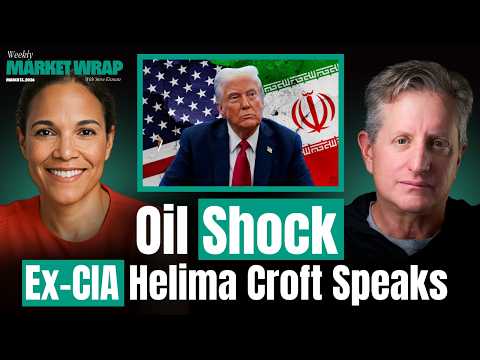
Helima Croft (RBC) : Ormuz est devenu un 'parking lot'

Energy is now clearly in the crosshairs of the Iran war, with the Strait of Hormuz effectively closed and key facilities directly targeted including Qatar's LNG operations. Tanker traffic through the Strait of Hormuz has collapsed dramatically. While Iran has not yet officially stated its aim to close the waterway, flows have been reduced to a mere seven tankers and one gas carrier on March 1, compared to 56 tankers on February 27.

↗ Lire la source — rbccm.com

Analyse d'Helima Croft (ex-CIA, RBC Capital Markets) : Ormuz effectivement fermé, trafic effondré de 56 à 7 pétroliers en quelques jours. L'énergie est clairement dans la ligne de mire de la guerre.

08
SOURCE WEB
SOURCE WEB
Financial Express

Wood Mackenzie : $200/baril n'est pas hors du domaine du possible

Oil prices could surge to as high as $200 a barrel if the ongoing conflict involving the United States, Israel and Iran disrupts global supply further, according to a new analysis by Wood Mackenzie. The ongoing conflict involving the US, Israel, and Iran is sending shockwaves through the energy world. According to a fresh report from Wood Mackenzie, we are looking at a massive supply gap of 15 million barrels of oil every single day. If the situation doesn't settle and key shipping routes like the Strait of Hormuz stay blocked, experts warn that prices could skyrocket to $150—or even $200—very soon.

↗ Lire la source — financialexpress.com

Modélisation Wood Mackenzie : $200/baril possible si Ormuz reste bloqué. 15 millions de barils/jour hors ligne, un gap d'approvisionnement massif.

09
SOURCE WEB
SOURCE WEB
International Energy Agency

L'AIE autorise la plus grande libération de stocks d'urgence de l'histoire

The 32 Member countries of the International Energy Agency unanimously agreed today to make 400 million barrels of oil from their emergency reserves available to the market to address disruptions in oil markets stemming from the war in the Middle East. 'The oil market challenges we are facing are unprecedented in scale, therefore I am very glad that IEA Member countries have responded with an emergency collective action of unprecedented size,' said IEA Executive Director Fatih Birol.

↗ Lire la source — iea.org

Réponse institutionnelle de l'AIE (Fatih Birol) : 400 millions de barils libérés, la plus grande action collective d'urgence de l'histoire. Les défis pétroliers sont sans précédent.

10
SOURCE WEB
SOURCE WEB
Oxford Economics

Oxford Economics : $140/baril pendant 2 mois = récession en Europe et au Japon

Using our Global Economic Model (GEM), we ran a simulation that assumes Brent crude oil averages around $140pb for two months. The results show: If global oil prices averaged around $140 per barrel for two months – along with the knock-on effects of a significant tightening in financial market conditions, heightened supply-chain disruptions, and a continuing deterioration in the collective psyche – it would be enough to push parts of the global economy into a mild recession. There are mild contractions in the Eurozone, the UK, and Japan, while the US nears a temporary standstill and layoffs push up the unemployment rate. World CPI inflation would spike, peaking at 5.8%.

↗ Lire la source — oxfordeconomics.com

Modélisation Oxford Economics : $140/baril pendant 2 mois = seuil de rupture. Contractions en zone euro, UK, Japon. Inflation mondiale à 5,8%. Le prix qui casse l'économie.

11
SOURCE WEB
SOURCE WEB
Bruegel

Bruegel : l'Europe prise au piège avec des stocks de gaz au plus bas depuis 5 ans

Europe's most pronounced vulnerability is LNG. If LNG flows via the Strait of Hormuz are curtailed, global spot availability tightens immediately. Europe would then be forced to compete with Asian buyers for flexible cargoes on the spot market – something seen during the 2021-2023 energy crisis. This would push up European gas prices, especially because Europe started 2026 with much lower gas storage levels than recent years: 46 billion cubic metres (bcm) at the end of February 2026, compared to 60 bcm in 2025 and 77 bcm in 2024.

↗ Lire la source — bruegel.org

Analyse Bruegel (Simone Tagliapietra) : vulnérabilité européenne critique. Stocks de gaz à 46 bcm vs 77 bcm en 2024. L'Europe devra concurrencer l'Asie pour les cargos spot.

12
SOURCE WEB
SOURCE WEB
Atlantic Council

Atlantic Council : comment la guerre en Iran pourrait déclencher une crise énergétique européenne

With the conflict in the Gulf well into its third week, a difficult reality is setting in across Europe: Even if a cease-fire were agreed today, the continent is likely already heading toward an energy crisis. The ongoing US-Israeli strikes on Iran, along with Tehran's retaliation across the Gulf, have produced one of the most severe disruptions to global energy markets in decades. At the center of the crisis is the Strait of Hormuz, the most critical chokepoint in the global energy trade. Approximately 20 percent of global LNG trade passed through the strait before the current conflict, much of it originating in Qatar, the world's second-largest LNG exporter. There is no viable alternative export route for this LNG.

↗ Lire la source — atlanticcouncil.org

Analyse Atlantic Council : même avec un cessez-le-feu immédiat, l'Europe se dirige vers une crise énergétique. 20% du LNG mondial passe par Ormuz, sans alternative viable pour le LNG qatari.

13
SOURCE WEB
SOURCE WEB
IFRI

IFRI : la guerre en Iran et l'envolée du pétrole peuvent-elles engendrer une hausse généralisée des prix ?

Le détroit d'Ormuz est vraiment le nœud gordien du trafic pétrolier mondial. On estime qu'environ 20% de la consommation mondiale de pétrole y transite chaque jour. Il faut ajouter le gaz naturel liquéfié (GNL), devenu un marché très mondialisé, y compris pour l'Europe depuis la guerre en Ukraine. Le premier secteur concerné est le transport. Mais ce n'est pas le seul car les intrants agricoles, notamment les engrais, sont directement liés aux hydrocarbures. Un choc pétrolier signifie d'abord une hausse des coûts pour les entreprises, donc une pression sur leur profitabilité. Elles finiront par la répercuter dans les prix, même si ce n'est pas immédiat.

↗ Lire la source — ifri.org

Analyse IFRI : Ormuz est le nœud gordien du trafic pétrolier. Les effets en cascade touchent transport, agriculture, chimie. Le choc pétrolier se répercutera sur tous les prix.

14
SOURCE WEB
SOURCE WEB
Sciences et Avenir

Six think tanks français appellent à accélérer l'électrification plutôt que les rustines fossiles

C'est une première. Jamais les principaux cercles de réflexion et bureaux d'études français sur la transition énergétique ne s'étaient réunis pour délivrer un message commun. L'Institut Montaigne, le Shift Project, la Fondation Jean-Jaurès, Terra Nova, l'IDDRI, l'Institut Jacques-Delors et l'I4CE se rejoignent pour appeler à l'accélération de l'électrification de l'économie française afin de sortir au plus vite des énergies fossiles, renforcer l'indépendance énergétique, mieux protéger ménages et entreprises contre les futurs chocs énergétiques.

↗ Lire la source — sciencesetavenir.fr

Appel inédit de six think tanks français (Montaigne, Shift, Jean-Jaurès, Terra Nova, IDDRI, I4CE) : accélérer l'électrification pour sortir des fossiles et protéger contre les futurs chocs énergétiques.

15
SOURCE WEB
SOURCE WEB
International Centre for Counter-Terrorism

ICCT : de Téhéran à l'Europe, les risques terroristes après l'assassinat de l'Ayatollah

Europe and the US could be even more directly affected. Over the past decade, data collected by Matthew Levitt shows that Iran increased its collaboration with and use of criminal networks in Western countries to commit violence and target journalists, politicians, Jewish communities, and Iranian and Kurdish dissidents. In Germany, during hearings in a Dusseldorf state court, the prosecution established that Iran sponsored a former Hells Angels member, including travel to Iran, to plan and recruit a perpetrator for an attack against a synagogue in Bochum.

↗ Lire la source — icct.nl

Analyse ICCT (La Haye) : l'Iran a intensifié sa collaboration avec des réseaux criminels en Europe. Plots documentés en Allemagne (synagogue de Bochum), Suède, Espagne. Cibles : journalistes, politiciens, communautés juives, dissidents.

16
SOURCE WEB
SOURCE WEB
Fortune

Amiral Stavridis : l'Iran est sur un 'death ground', il pourrait 'go big'

Retired Admiral James Stavridis, former NATO supreme allied commander, told CNN that Iran has two options. One is to continue launching missiles at the current tempo and hunker down. 'Option two: if they truly believe they're at the end of the string, they could go big and that would mean closing the Strait of Hormuz, conducting terrorist attacks against American diplomats, businessmen and citizens in the region and elsewhere,' he added. Stavridis also recalled teachings from ancient Chinese military strategist Sun Tzu, who counseled finding a way out of conflicts without actually fighting—but fighting when on 'death ground.' 'I think the Iranian leadership may feel they are on death ground. I'd look for them to go big,' he predicted.

↗ Lire la source — fortune.com

Avertissement de l'amiral Stavridis (ex-commandant suprême OTAN) : l'Iran est sur un « death ground » (Sun Tzu). S'il se sent acculé, il pourrait « go big » : fermeture d'Ormuz, terrorisme, cyberattaques, activation des proxies.

18
TADDY
TADDY
The 11th Hour with Stephanie Ruhle · épisode · 43 min

Pressure rising on Trump as economic consequences of Iran war increase

Analysis of Iran war's economic fallout. Features the new Supreme Leader vowing to fight on with Strait of Hormuz remaining closed. Discussion of oil price spikes, stock market drops, and economic consequences for Americans.

Podcast analysant les conséquences économiques croissantes de la guerre en Iran : prix du pétrole, marchés financiers, impact sur les Américains. Ormuz reste fermé.

FIN
Vous avez fini le parcours.
18 nœuds · ~5 min de lecture
← Retour aux dossiers