01
AFK
★ AFK
Les titres trouvés dans le flux AFK
1 articles · filtres par pertinence sémantique
Le 28 avril 2025, la péninsule Ibérique a sombré dans le noir : une dizaine d'heures sans courant. Un an plus tard, le rapport final de l'ENTSO-E tranche — pas de coupable unique, mais un enchaînement de surtensions et de déclenchements en cascade, jusqu'à ce que l'Espagne et le Portugal décrochent du réseau européen.
Pourquoi rouvrir ce dossier maintenant ? Parce que cet été, les partis finalisent leurs programmes pour 2027. D'un côté, les lobbys nucléaires brandissent le blackout ibérique comme la preuve que l'atome est indispensable. De l'autre, des militants poussent pour en sortir vite — et on les comprend : Tchernobyl, Fukushima, Three Mile Island sont dans toutes les mémoires.
Mais le rapport rappelle ce que la politique oublie souvent : une décision énergétique se heurte au monde physique. Un réseau interconnecté ne tient que si toutes ses machines tournent en synchronisme, à 50 hertz, partout au même instant. Cette fréquence est le pouls du système : elle dit, seconde après seconde, si la production équilibre la consommation. Tenir ce pouls — l'inertie, la tension, la capacité à redémarrer après une panne — voilà le vrai commun, fait d'infrastructures lourdes que personne ne voit.
Et ce commun pose à chaque camp une question qu'il préfère éviter :
Chez AFK, on pense que 2027 est un rendez-vous majeur. On peut choisir son candidat parce qu'il parle bien sur TikTok. On peut aussi fouiller les programmes, décortiquer les enjeux, soulever les tapis. On ne choisit pas pour vous : on rassemble les textes qui permettent de se faire une opinion.
La rédaction d'AFK.live
The investigation concludes that the blackout resulted from a combination of many interacting factors, including oscillations, gaps in voltage and reactive power control, differences in voltage regulation practices, rapid output reductions and generator disconnections in Spain, and uneven stabilisation capabilities. These factors led to fast voltage increases and cascading generation disconnections, resulting in the blackout in continental Spain and Portugal.
↗ Lire la source — entsoe.euSource institutionnelle officielle : le rapport ENTSO-E qui établit que le problème est le contrôle de tension, pas les renouvelables en soi.
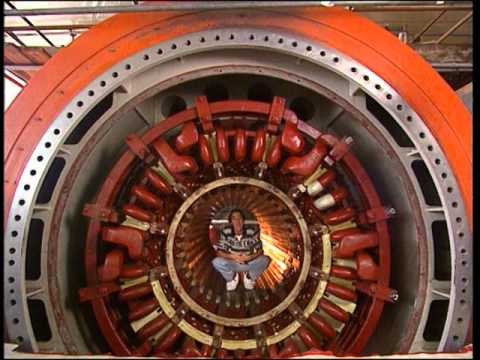
Nuclear generates the most system inertia followed by natural gas (combined cycle). The Oxford Institute for Energy Studies explains: [The figure] reflects that the heaviest rotating masses on any grid, which often provide the highest inertia both in relative and absolute terms, are the steam turbine sets of large nuclear power plants. For the largest individual nuclear units with a power rating above 1200 megawatts (MW), the shaft string with its turbines and generator rotors can be up to 70 meters long and have a total rotating mass exceeding 1100 tons. Turbines this large operate at "half speed," meaning this mass is rotating at half the frequency of the grid (1500 revolutions per minute for 50 Hz grids, 1800 for 60 Hz grids), to limit tensile stress. It takes a huge amount of energy to either speed up or slow down such a heavy component, which is the intuition behind the dampening effect such a turbine has on any disturbance in the grid.
↗ Lire la source — aei.orgTribune pro-nucléaire qui lit le blackout de manière simpliste : illustre une interprétation partisane que le dossier veut dépasser.
Vulgarisation grand public du réseau électrique : de la production à la consommation, format pédagogique accessible.
Série pédagogique EDF sur l'équilibre production/consommation : explique le principe fondamental de stabilité du réseau.
La stabilité des réseaux électriques est une qualité physique de leur régulation par laquelle les situations modérément perturbées reviennent progressivement à un état d'équilibre (stabilité au sens de stabilité asymptotique). La régulation des réseaux électriques est l'ensemble des moyens mis en œuvre (processus d'asservissement agissant sur un système dynamique) afin de maintenir proches de leurs valeurs de consigne les grandeurs de fréquence et de tension sur l'ensemble du réseau.
↗ Lire la source — fr.wikipedia.orgNœud-concept (ajout éditorial) : pose la définition de la stabilité d'un réseau — régulation de la fréquence et de la tension — socle pédagogique de la Phase 2.
Podcast sur les smart grids et la numérisation du réseau : complète la pédagogie avec l'angle technologique moderne.
The investigation concludes that the blackout resulted from a combination of many interacting factors, including oscillations, gaps in voltage and reactive power control, differences in voltage regulation practices, rapid output reductions and generator disconnections in Spain, and uneven stabilisation capabilities. These factors led to fast increases of voltage and cascading generation disconnections in Spain, resulting in the blackout in continental Spain and Portugal. Based on these findings, the Expert Panel sets out recommendations addressing each of the factors identified in the report to help prevent similar events in the future. These include strengthened operational practices, improved monitoring of system behaviour and closer coordination and data exchange among power system actors. The findings of the investigation also underscore the need for regulatory frameworks to adapt in order to support the evolving nature of the power system. The 28 April blackout was a first of its kind event, and the recommendations aim to strengthen system resilience with solutions that are already technologically deployable. This blackout highlights how developments at the local level can have system-wide implications and underlines the importance of maintaining strong links between local and European system behaviour and coordination, while ensuring that market mechanisms, regulatory frameworks and energy policies remain aligned with the physical limits of the system.
↗ Lire la source — entsoe.euDétails techniques du rapport ENTSO-E : chronologie, 50%+ solaire, onduleurs grid-following, déconnexion France, 31 GW perdus.
The final report of the Expert Panel on the 28 April 2025 blackout in continental Spain and Portugal identifies its causes and outlines recommendations to strengthen the resilience of Europe’s interconnected electricity system. It was prepared by a 49-member Panel including representatives from Transmission System Operators (TSOs), Regional Coordination Centres (RCCs), ACER and National Regulatory Authorities (NRAs), and was chaired by experts from two unaffected TSOs.
↗ Lire la source — eepublicdownloads.blob.core.windows.netSource primaire (ajout éditorial) : le rapport final complet du panel d'experts ENTSO-E (PDF), document de référence cité en Phase 3.
In the first year without nuclear energy, non-renewable generation fell by 26 percent. While electricity generated from renewables has increased, electricity generation from fossil fuels declined. In the first year without nuclear energy, around 154.4 TWh of electricity was generated from coal, natural gas, oil and waste. This is significantly below the figures from previous years and 26 percent below last year's figures over the same period. Their share of net public electricity generation fell to 33.7 percent. Reasons for this include the high prices for natural gas and hard coal and the high CO2 certificate costs. The load also fell by 2.1 percent to 459 TWh. There are many reasons for this, for example, electricity savings in the industrial and private sectors, a decline in production and increased self-consumption of photovoltaic electricity.
↗ Lire la source — ise.fraunhofer.deCas allemand : un an après la sortie du nucléaire, les fossiles assurent encore la stabilité du réseau (angle mort climatique).
L'onduleur grid-forming présente un intérêt technique lorsqu'il est couplé à des batteries. Ce duo permet de lisser la production naturelle du soleil ou du vent en réinjectant l'électricité stockée selon les besoins du système. Ces parcs hybrides, lorsqu'ils sont dimensionnés et pilotés de manière adéquate, participent à l'équilibre entre production et consommation. Pour les gestionnaires de réseaux comme RTE en France, ces technologies offrent une flexibilité capable de répondre aux signaux de fréquence. Une expérimentation impliquant RTE et l'utilisation de batteries équipées de cette technologie est d'ailleurs attendue pour le second semestre 2026 afin de valider ces services de stabilité en conditions réelles.
↗ Lire la source — les-energies-renouvelables.euSolution technique : onduleurs grid-forming + batteries pour l'inertie synthétique, validés par RTE.
This document outlines the EirGrid and SONI strategy for the implementation of GFM capabilities in Ireland and Northern Ireland. The strategy provides a pathway for the integration of advanced control capabilities within PPMs and HVDC systems, enabling the provision of essential system services to ensure the stability and resilience of the All-Island power system at higher levels of renewable penetration. The strategy follows significant industry and stakeholder engagement over an eight month period in 2025 and is aligned with forthcoming European legislation (RfG 2.0 & HVDC 2.0) and international best practice.
↗ Lire la source — cms.eirgrid.ieCas irlandais : stratégie grid-forming pour un réseau quasi-insulaire sans gros voisin nucléaire.
EirGrid, which is responsible for operating, developing and enhancing Ireland's electricity grid and market, has awarded four contracts for renewable energy integration technologies, called synchronous condensers, which will provide 'low carbon inertia services' (LCIS), to support Ireland's energy transition. This technology is vital for maintaining stability on the electricity grid while operating with higher levels of renewable energy. Historically, these inertia capabilities required to keep the power system stable could only be provided by large conventional generators. The contracts awarded to build synchronous condensers will together provide 6,963 MVA.s of synchronous inertia, as well as reactive power support and short-circuit contribution, without generating active power, which will allow EirGrid to integrate more renewables onto the power system.
↗ Lire la source — eirgrid.ieCompensateurs synchrones irlandais : solution concrète pour fournir l'inertie sans production active, 6 963 MVA.s contractés.
Livre français sur la transition énergétique : pose la question centrale du dossier dans le contexte français.